Road furniture
Bollards & Road Furniture — GeoGuessr Meta That Wins Rounds
Learn GeoGuessr bollards, guardrails, chevrons, and snow poles — the road furniture meta that separates continent from country in seconds.
3 min read ·
Road furniture is one of the highest-ROI GeoGuessr skills you can learn. Bollards, guardrails, chevrons, and snow poles show up in almost every rural round — and they survive when language is missing.
This guide is a practical checklist. Use it while you train on KnowYourGeo continent maps, then reopen it after AI review when a furniture clue decided the pin.
# Why bollards matter more than most signs
Signs can be rare, vandalized, or out of frame. Bollards sit at the edge of the road in the Street View camera’s natural field of view. Once you know a few families, you can:
- Confirm a region you already suspect
- Break lookalike pairs (e.g. Scandinavia vs Baltics vs Canada)
- Save time when the landscape looks “generic temperate”
Treat bollards as a second opinion, not the only clue. Combine them with driving side, vegetation, and script.
# Bollard reading checklist
When a bollard appears, ask in order:
- Shape — cylindrical post, flat paddle, triangular, wooden beam?
- Colors — single color, black/white bands, yellow/black, red reflector?
- Reflectors — round cats-eyes, rectangular plates, none?
- Material — wood, plastic, concrete, metal?
- Spacing / mounting — roadside only, median, tied to guardrail?
Write those five answers before you zoom the map. It forces you to actually see the object instead of guessing from vibes.
# High-value furniture families
# Nordic and northern Europe
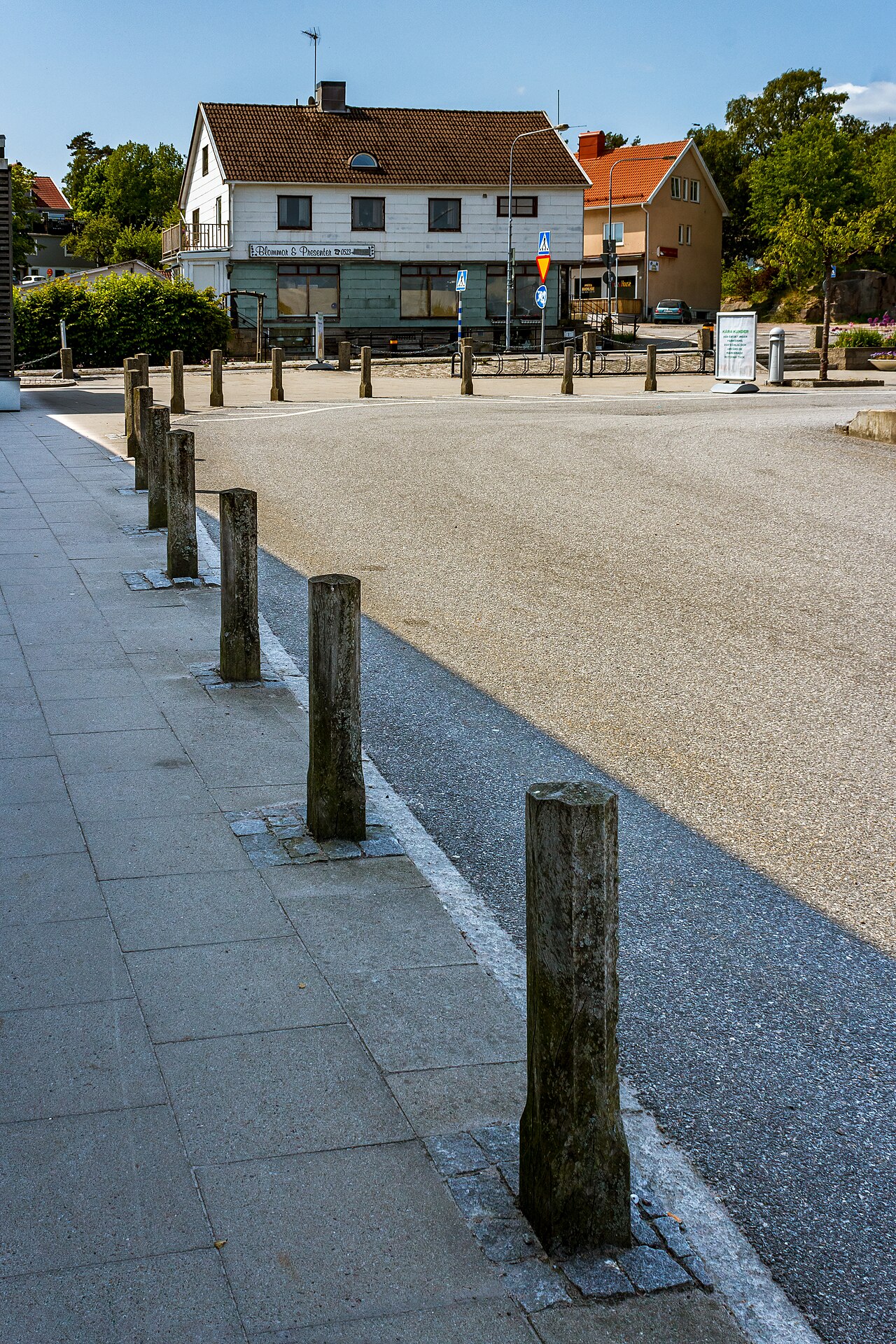
Expect frequent reflective posts, winter-oriented designs, and wooden variants near villages. Snow poles (tall, thin markers) are a strong northern signal when paired with boreal trees and sparse settlement.

# Continental Europe chevrons
Red-and-white chevron boards on curves are classic continental Europe. They do not pin a single country, but they strongly support “Europe” and often pair with E-road shields, Latin script, and dense village architecture.

# East Asian guardrails and roadside hardware
Japanese and Korean rural roads often show distinctive metal guardrail profiles, clean painted edges, and dense utility hardware. If you also see left-hand traffic and CJK script, commit early.

# Guardrails: the overlooked twin of bollards
Guardrails (crash barriers) vary by:
- beam profile (W-beam vs box vs cable)
- post style and spacing
- end terminals (flared, buried, energy-absorbing)
- color / rust / paint
In practice: glance once at the beam + post combo, then move on. You are collecting a fingerprint, not writing an engineering report.
# How to train this on KnowYourGeo
- Play a Europe or Asia continent map for 5 rounds.
- After each round, ask: “Did furniture appear? Did I use it?”
- When AI coaching mentions a bollard or rail you missed, screenshot it into a personal note.
- Replay the same continent the next day with a furniture-first scan (5 seconds before language).
# Common mistakes
- Overfitting one photo. One wooden bollard does not equal Sweden every time — check vegetation and script.
- Ignoring context. A French-looking chevron in a tropical palm landscape needs a second look; coverage and generation quirks exist.
- Skipping the first 5 seconds. Furniture is fastest when you scan roadside edges immediately after load.
# Quick drill for this week
Do three No Move sessions where your only allowed early clues are: driving side, bollard/rail family, and one vegetation note. Pin after 20 seconds. Review. Repeat. You will feel the score jump before you “know more countries.”
Road furniture is boring until it starts winning rounds. Make it boring on purpose — then it becomes automatic.